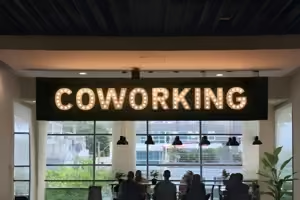
Put simply, refurbishment upgrades an office to a market-ready condition, while a fit out adapts a space for a specific business.
The terms office fit out and office refurbishment are often used interchangeably, particularly when moving into existing office space. In practice, this can create confusion about what work is included, who is responsible for it, and when it should take place.
This article explains the distinction between the two in detail, helping businesses avoid incorrect assumptions, unexpected costs, and delays.
Why Office Fit Out and Refurbishment Are Often Confused
Most office space in the UK is located within existing buildings rather than new developments. As a result, moving into a new office almost always requires some work before occupation, which can lead to confusion between fit out and refurbishment.
• Timings often overlap
In many cases, refurbishment and fit out work often overlap or even take place at the same time within an office project. This is particularly true in serviced and some managed offices, where both stages may be completed by the landlord or provider before occupiers are involved. Therefore, this makes it hard for companies to see where refurbishment ends and fit out begins.
• Landlords and agents use the terms interchangeably
The terms refurbishment and fit out are also often described using loose or similar language. For example, the phrase "recently refurbished and fully fitted" is commonly used by landlords and agents. This blurs the distinction between the two and contributes to further confusion for businesses.
• Both involve physical changes
Both refurbishment and fit out involve physical work and changes to an office space, including layouts, finishes, and services. As a result, the outcomes can appear similar on the surface and it may not be immediately clear whether the work has been carried out as an upgrade to the building or to adapt the space for a specific organisation.
• Businesses focus on appearance & function, not definitions
Most companies care about whether a space looks presentable and works for their team, rather than how the work is categorised. Therefore, many occupiers do not take the time to understand the differences between the two.
Cosmetic changes such as painting, refreshing flooring, or selecting furniture are expected when moving office. However, this type of work is not classed as either refurbishment or fit out and often adds to the confusion, with all activity grouped together under the same label.

• Cost responsibility can be unclear
It is commonly assumed that refurbishment lies with the landlord, while the occupier is responsible for the fit out. Although this is often the case in traditional offices, it is not universal. Both responsibility and costs can vary depending on lease terms, incentives and the office model, adding further uncertainty to how the terms are understood.
• Cat A/Cat B terminology is used alongside both terms
Cat A and Cat B refer to levels of finish and are frequently used alongside refurbishment and fit out. Due to this, the terminology often adds confusion for businesses trying to understand the stage or condition of an office.
What Is an Office Fit Out?
An office fit out is the process of adapting a space to meet a company's specific needs. It usually begins once the occupier is confirmed and lease terms have been agreed. However, when renting serviced offices, the operator typically completes this work beforehand. The focus is on making the office functional for day-to-day operations and supporting the way that the business works.
A fit out often includes:
• Designing layouts based on headcount, departments, and hybrid working patterns
• Creating meeting rooms, private or executive offices, and collaboration areas
• Installing partitions, joinery, and other structural elements
• Integrating smart controls, network cabling and AV systems
• Applying branding and company-specific finishes
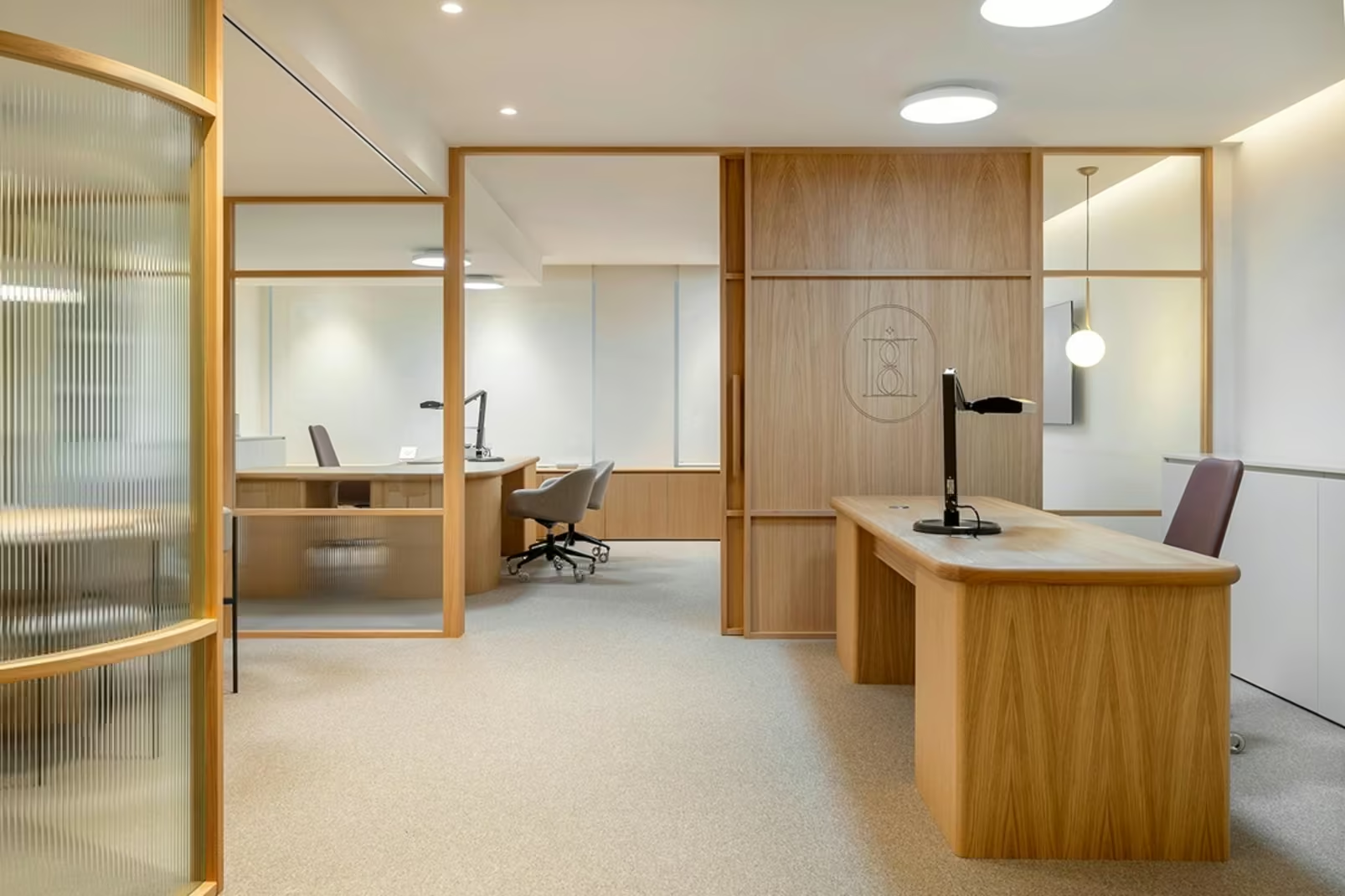
As fit outs are customised for a single organisation, the scope can vary significantly depending on requirements, budget, and timelines. The defining characteristic is the bespoke nature of a fit out and the space being designed specifically for one occupier, not the general office market.
What Is Office Refurbishment?
On the other hand, office refurbishment involves improving the underlying condition of a workspace to meet modern market expectations. Refurbishment is typically landlord-led and completed before the office is marketed or re-let.
The aim is to enhance the building's quality and performance for multiple future occupiers, rather than tailoring it to a specific business.
Typical refurbishment work includes:
• Upgrading building systems such as heating, ventilation and lighting
• Improving energy efficiency and sustainability performance
• Reworking layouts to create flexible, open-plan floorplates to suit a variety of companies
• Enhancing common areas such as receptions, breakout spaces, and other shared facilities
• Using neutral finishes for broad market appeal
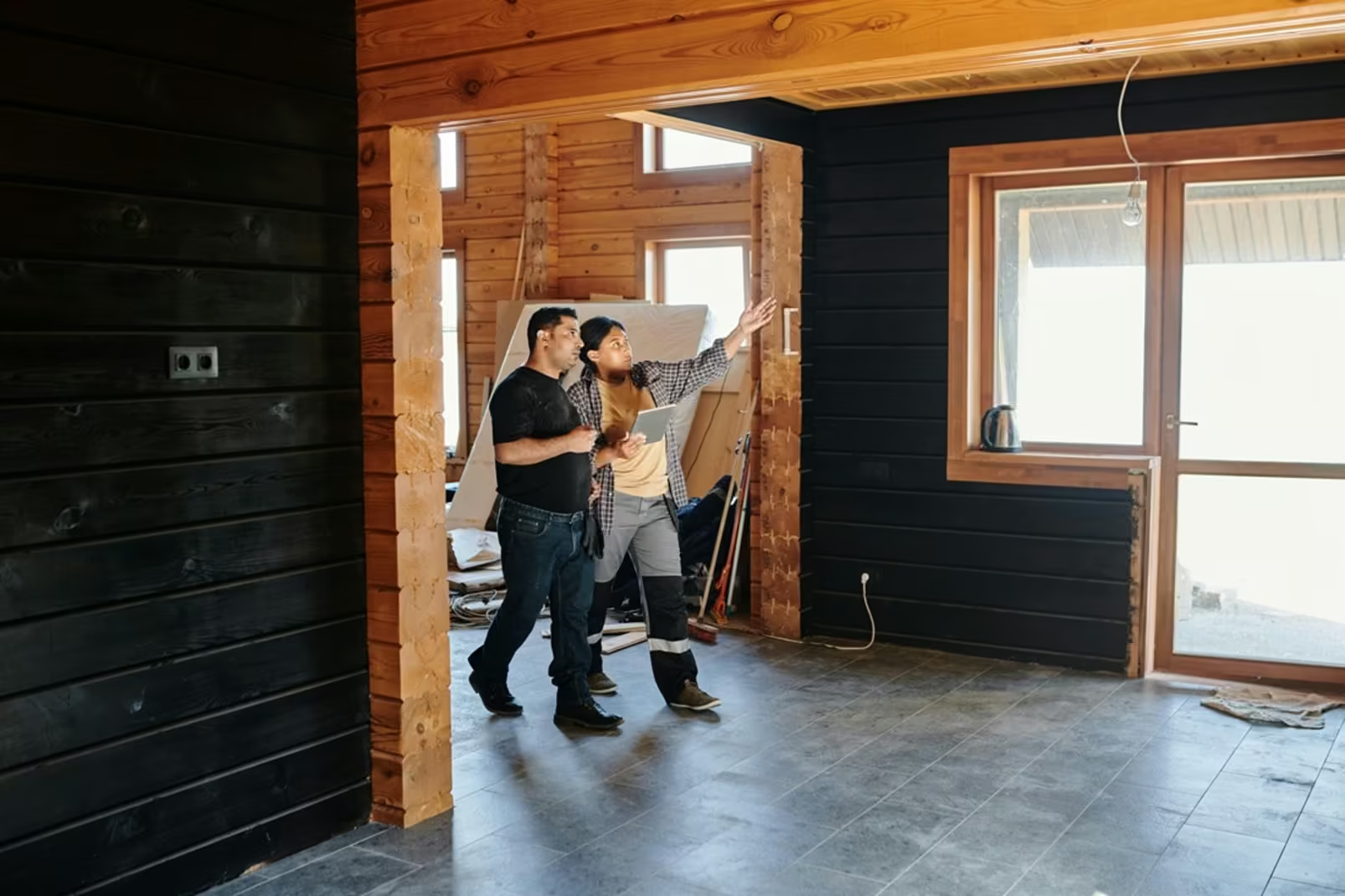
Unlike an office fit out, refurbishment avoids branding and bespoke design. Instead, the purpose is to deliver a market-ready space that can be adapted to suit future tenants later.
Why Understanding the Difference Between the Terms Matters
Understanding the difference between fit out and refurbishment is more than a technical detail. It directly affects decision-making throughout the office search and move process.
From a cost perspective, misunderstanding the terms can lead to incorrect assumptions about what works are included, resulting in underestimated budgets or unexpected fees later on.
Timing is another consideration. A fit out introduces an additional delivery phase that needs to be planned and managed, whereas refurbishment works are usually completed prior to the space being marketed and viewed.

Responsibility also differs. Refurbishment is generally led by the landlord, whereas responsibility for a fit out depends on the agreement and whether you are renting a traditional leased space, a serviced office or a managed workspace. When this is unclear, it can cause both delays and disputes.
Ultimately, understanding the distinction reduces risk for businesses. When a company knows what stage a space is at and what work still needs to be done, they can compare options more accurately, ask the right questions during viewings, and choose offices that fit their budget and timeframe.
Office fit out and office refurbishment serve different yet complementary purposes. Refurbishment focuses on improving the overall condition and performance of a space, while a fit out customises it to meet the needs of an individual organisation.
Understanding the difference allows businesses to make more informed choices, manage expectations, and plan their office move with greater certainty and control.