

Office landlords sometimes use rent-free incentives to attract tenants looking to rent office space. This guide explains how they work, how long they usually last, why landlords offer them, how to negotiate the best deal and what to consider before signing.
What Is a Rent-Free Period?
A rent-free period is an agreed length of time at the start of a lease during which the occupier doesn't pay any rent. Workspace providers offer it as an incentive to secure a tenant, and the terms are typically offered during the broader lease negotiation.
How Long a Rent-Free Period Typically Lasts
A rent-free period can last anything from 1 to 6 months on a traditional office lease. In our experience, many landlords offer 1 month for every year of the agreement.
Managed offices typically offer incentives like those available with traditional leases, especially for longer commitments.
Serviced offices allow clients to rent short-term, but providers normally offer a rent-free period when a business signs for 12 or 24 months. We generally see this work out to 1 to 2 months rent-free.
Fit-out requirements can also extend the rent-free period if the tenant foots the bill. Landlords may provide additional time to cover the fit-out period rather than charging rent on a space that is not yet ready for occupation.
In comparison, when the landlord or office provider fits out the space instead, the rent-free period tends to be shorter or non-existent due to the expense incurred for the fit-out.
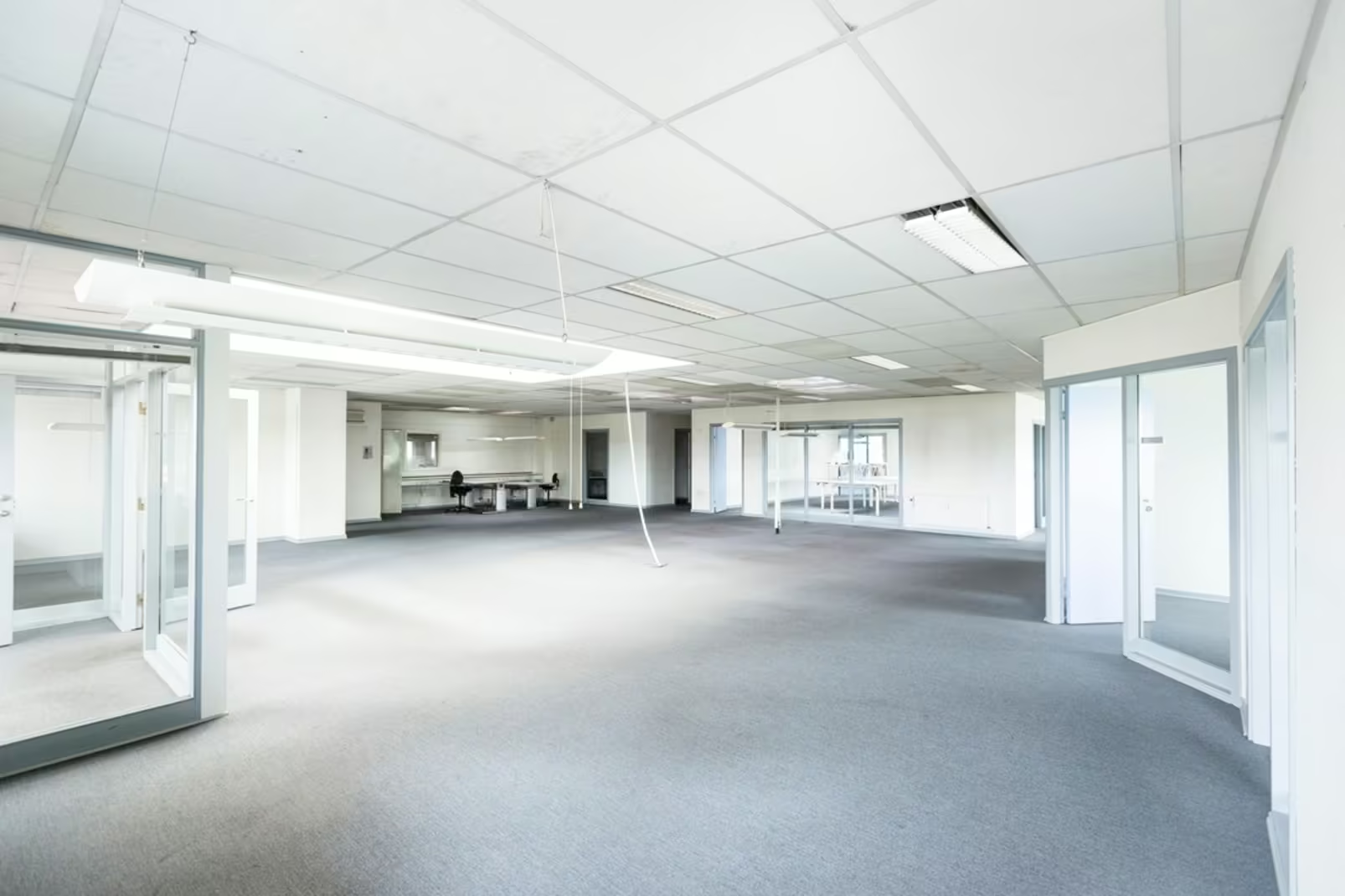
Why Landlords Offer Rent-Free Periods
Landlords often prefer rent-free periods over reducing the headline rent. This helps to attract new tenants, while maintaining the building’s valuation and avoiding a lower benchmark for future lettings.
Empty offices generate no income but still incur ongoing costs for landlords, so offering a rent-free term can be more cost-effective than leaving the space vacant while waiting for a tenant to pay the full asking price.

Based on our experience, landlords offer more generous incentives on longer leases. It's like buying in bulk where a larger discount is achieved for a longer commitment.
Market conditions can also have an impact. When office space supply exceeds demand, we typically see landlords compete harder for tenants, which can lead to better rent-free periods. However, incentives are generally more limited in an active market.
How to Negotiate the Best Rent-Free Terms
Although there is no guaranteed way to secure a longer rent-free term, there are several ways to strengthen your negotiating position.
Find space that’s been sitting vacant for a long time
As we touched on above, when a building is vacant, landlords are usually more willing to negotiate a rent-free period than those with near-full properties, particularly if the space has been sitting empty for more than 6 months.
Demonstrate your covenant strength
Financially strong, well-established companies are lower risk to landlords because they provide greater confidence that they will meet rent and lease obligations. Therefore, we advise clients to prepare the right supporting information to demonstrate their covenant strength and help secure better terms.
Commit to a longer agreement
Committing to a longer lease agreement in exchange for more rent-free time works in both the business's and the landlord's favour, since it reduces their risk while giving you a more favourable upfront deal.

Consider paying close to the landlord’s asking price
While most organisations prefer to reduce their monthly rent, paying close to the landlord’s asking price can sometimes create additional leverage to achieve a longer rent-free period.
Offer a bigger deposit
Offering a larger deposit can sometimes improve a company’s position, particularly when its covenant strength alone isn’t enough to secure the terms it wants.
Use an Agent
Working with an agent such as FreeOfficeFinder can strengthen your negotiating position by giving you access to a broad range of available offices. Landlords know an agent will help you compare alternative options, which often encourages them to offer better terms to compete for your business.
When businesses enquire with us, we help them understand what length of rent-free time is realistic to expect, as well as any conditions attached to the incentive.
What to Know Before You Sign
Before signing a lease, we recommend checking the following details to ensure you fully understand the conditions of the agreement.
- Exact length of rent-free period - Confirm the exact length and start date before signing to ensure the terms have been documented correctly. This is usually agreed as part of the Heads of Terms before the lease is drawn up.
- How much the headline rent is – Headline rent is one of the most important things we advise our clients to review. We often see landlords balance generous rent-free periods with a higher asking rate, highlighting the importance of calculating the effective annual rent over the full term rather than focusing on the months saved upfront.
- Which costs still apply – A rent-free period usually applies to base rent only, meaning that businesses may still be charged for hidden costs like service charges, insurance, and business rates.
- Whether a clawback clause is included – Clawback clauses allow the landlord to reclaim the rent-free benefit if a tenant exits early through a break clause. We often find that clients focus on the incentive itself and overlook conditions like this.
- Conditions attached to the incentive - Some rent-free terms also come with certain conditions, such as completing fit-out work by an agreed date. In our experience, landlords may reduce or withdraw the incentive entirely if these requirements are not met.

Rent-free periods are an important part of many office lease negotiations, helping businesses reduce upfront costs and manage cash flow during a move. The length of a rent-free period largely depends on the lease type and current market conditions. Before signing, it’s important to assess the incentive carefully alongside the headline rent to understand its true value.
When searching for office space to rent, a broker like us at FreeOfficeFinder can help you compare options, negotiate terms and secure a deal that works best for your business.