
This annual market report analyses what companies looked for in London serviced offices between January and December 2025, based on our first-hand enquiry data, research and market activity.
As hybrid working remained the default arrangement for many companies and employee expectations rose, we observed more businesses move away from long leases and oversized floorplates. Enquiry demand shifted towards high-quality, experience-led serviced offices aligned with real occupancy levels, ESG objectives and in-person collaboration.
Key Findings from 2025
These points summarise the main patterns we observed across London serviced office enquiries over the course of 2025. Each finding is explored in more detail in the sections that follow.
• Office sizes were based on actual in-office attendance, typically with occupancy assumptions of 45–70% rather than total headcount.
• Businesses prioritised well-connected London locations, with commute time outweighing postcode prestige.
• ESG and energy performance became baseline requirements, with EPC A and B-rated buildings progressing more quickly through shortlists.
• Companies favoured experience-led, design-focused serviced offices that supported collaboration, flexibility and wellbeing.
Workspace Sizes Based on Real In-Office Attendance
A defining trend in 2025 was the shift towards choosing workspaces based on real, day-to-day attendance, rather than total headcount.
Our enquiry data showed that businesses planned for average occupancy levels of around 45–70%, influenced by sector and in-office attendance requirements. Higher occupancy assumptions were typically seen in finance and professional services teams, where in-person working expectations were more structured.
This led many companies to reduce their overall space requirements across the year, placing greater emphasis on smart layouts and more efficient use of space, rather than square footage.
Analysis of our 2025 enquiries showed the strongest demand for smaller, well-designed serviced offices, particularly 1500 to 7500 sq. ft. for SMEs and scale-ups and 5000 to 15,000 sq. ft. for larger, more established firms.
Instead of allocating one desk per employee, companies planned for around 6 to 8 desks per 10 members of staff, supported by shared or rotating desk policies. Priority was given to achieving the right balance between the number of workstations, meeting rooms, breakout areas, and collaboration spaces.
Our 2025 enquiry data also showed a strong preference for serviced office providers that allowed firms to resize easily. This flexibility was essential for teams still refining their attendance patterns throughout the year.

Well-Connected, Commuter-Friendly London Locations
Alongside space planning, location remained a decisive factor during 2025. Across our enquiries, commute time emerged as a significant barrier to office attendance. Our research indicated that over 50% of professionals considered commuting as a deterrent. As a result, companies placed greater value on accessibility and convenience than on a prestigious business address.
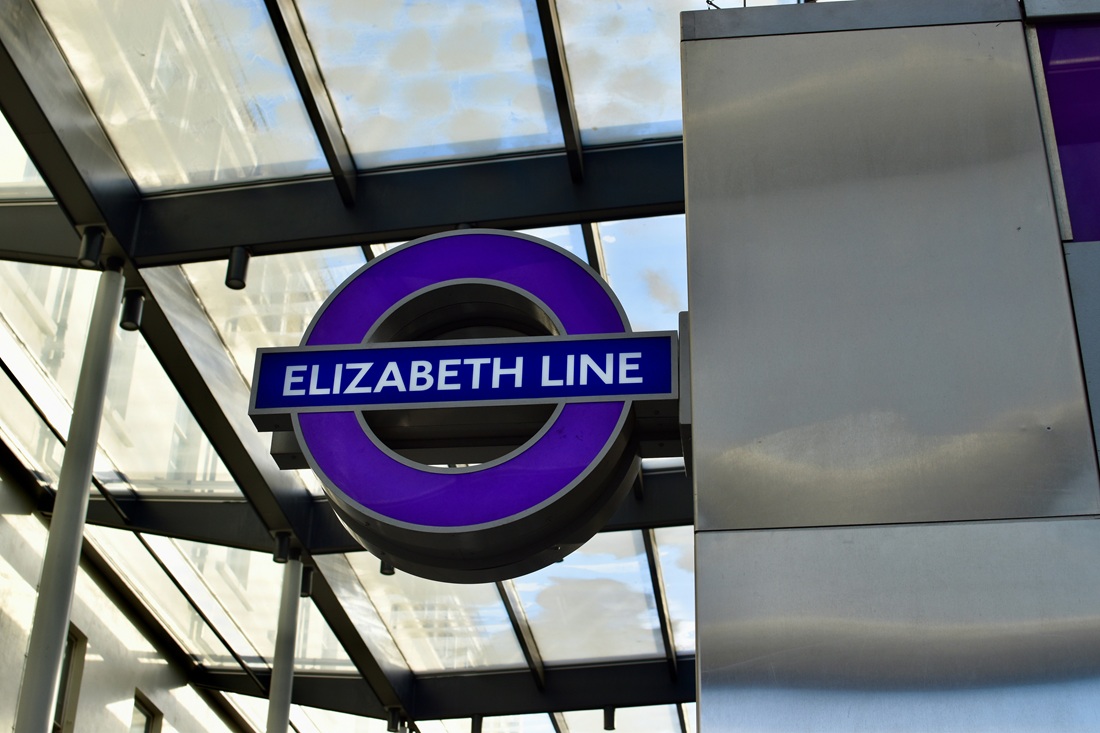
From our 2025 enquiry data, activity was highest in Soho, Farringdon, Liverpool Street and King’s Cross, driven by strong transport links, access to talent and local amenities. We also observed increased enquiry demand for workspaces near Elizabeth Line stations and major interchanges, enabling teams to reach serviced offices across London and the South East more easily.
Neighbourhoods across the West End, such as Fitzrovia and Marylebone, were also favoured for their mix of office space, retail and leisure options. We found within our 2025 enquiry data that employers deliberately chose highly connected locations next to local amenities to encourage higher in-office attendance, particularly where extended periods of remote work had begun to affect engagement.
Characterful, High-Quality Offices
Over the course of 2025, enquiry demand shifted from newer, high-spec buildings towards distinctive, design-led offices that supported brand identity and culture. Our findings showed that businesses looked for Grade A office space with modern design features in refurbished period buildings.
Our previous enquiry data showed that a significant share of Central London leasing activity was focused on high-specification workspace, a preference that remained evident throughout 2025.
In our experience, offices were no longer treated as functional environments for desk-based work. Instead, they were viewed as tools for attracting and retaining talent, reflecting company culture and creating a strong impression on clients.
This trend aligned with findings from our Grade A office report, which showed that design quality and employee experience had a clear influence on enquiry levels and demand.
Sustainability & ESG Credentials
Sustainability also became a firm decision driver in 2025, rather than a secondary consideration. We noticed a strong demand for EPC A and B-rated offices throughout the year, following earlier market evidence that over 40% of London leases in 2023 were secured in more environmentally responsible buildings.
We found that ESG discussions typically began earlier in the search process, particularly for larger and more established firms.
Our clients have indicated a clear preference for energy-efficient buildings, low-carbon CAT B refurbishments and office spaces aligned with recognised performance frameworks such as BREEAM, LEED and NABERS. A growing awareness of MEES regulations, including the move to EPC B by 2030, has also encouraged businesses to prioritise compliant office stock.
Employee expectations reinforced this shift, and our research showed that over 80% of employees looked for sustainable workspace practices, while over 75% expected greater ESG investment from employers. We observed that buildings offering space for bikes, EV charging, and transparent energy monitoring progressed through the shortlisting process more quickly across the year.
Inclusive, Wellness-Led Office Environments
As predicted in our 2024 market trend report, wellbeing and inclusivity were no longer seen as optional for many occupiers in 2025. We found that companies sought serviced office spaces with better ventilation, HEPA filtration, humidity control, and stable internal temperatures. Natural light, ergonomic furniture and good acoustics were widely regarded as minimum standards, rather than premium extras.
Inclusive office design also became a more defined requirement. Many clients we worked with requested offices that offered a variety of workspace settings, allowing teams to move between collaborative areas and quieter, private spaces to support different staff needs.
Businesses we helped find office space to rent across London in 2025 reported clear benefits from wellbeing-focused, accessible environments. This included productivity and collaboration improvements of up to 70%, with retention strengthening by over 60%.
Amenity-Rich Office Buildings
Beyond core wellbeing and environmental standards, companies also assessed the day-to-day usefulness of amenities. Showers and cycle storage were widely expected as standard facilities. Based on our visits to flexible workspaces across London in 2025, we observed that complimentary tea, coffee, snacks and breakfasts encouraged informal collaboration and spontaneous networking.
Meeting room availability was a key discussion point in serviced office searches, as companies recognised the role that well-designed meeting spaces have on productivity. Many of our clients worked to a ratio of one room per 10-15 employees to support hybrid calls, client meetings and collaborative work, often supplemented by shared meeting credits.
Demand also increased for wellbeing-led amenities such as on-site gyms, meditation rooms and yoga studios, supporting healthier, active lifestyles. We also noticed strong interest in buildings with outdoor space, including terraces and rooftop gardens. These areas were frequently highlighted as valuable communal spaces where staff could step away from their desks.
Our enquiry data showed that providers who hosted frequent events consistently saw higher engagement from businesses. Pet-friendly policies also became a deciding factor for many firms, particularly in the creative and tech-led sectors.

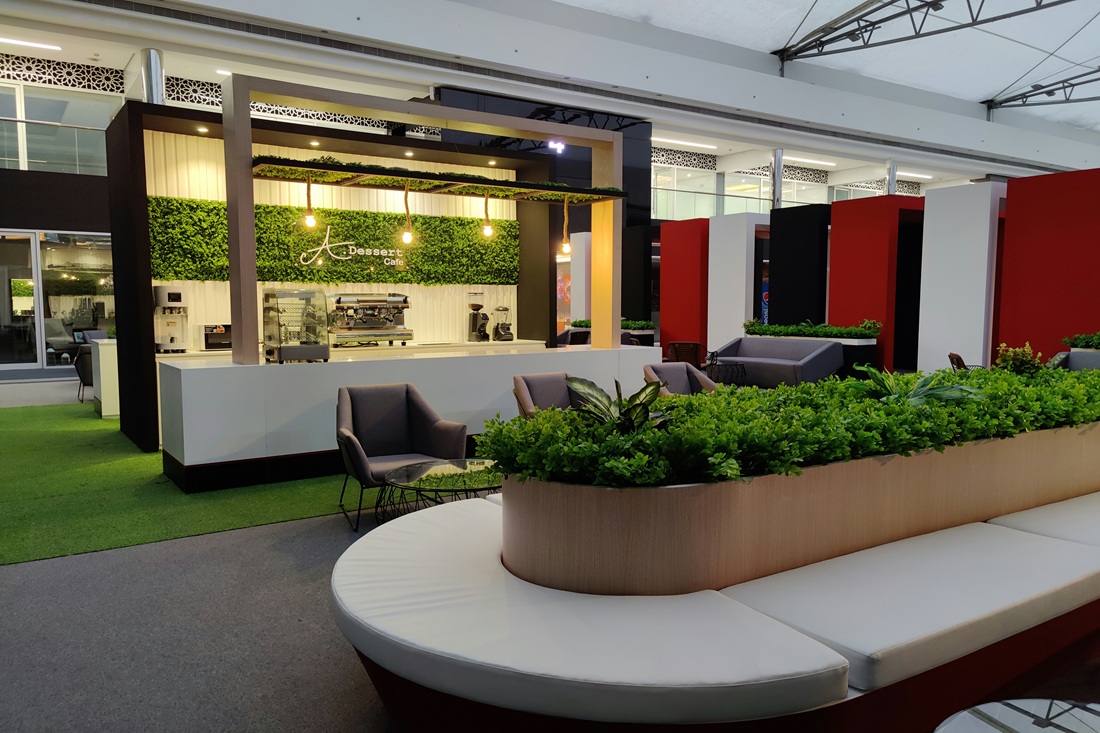
In our experience, hospitality-inspired interiors, with cafes, comfortable lounges, and well-designed breakout areas, helped offices to “earn the commute” within hybrid working models.
Adaptable & Collaboration-Friendly Layouts
Office layout expectations shifted significantly during 2025. We observed that companies sought Activity-Based Working (ABW) environments that enabled different types of work throughout the day.
We saw particularly strong demand for movable partitions, modular furniture, and flexible seating options, which helped create defined zones and private rooms. Quiet pods and phone booths with acoustic panels were also regularly requested for confidential and focused work.
Our research demonstrated that organisations adopting more flexible, activity-led layouts achieved productivity gains of over 15%, equivalent to over six additional hours per employee per week.
Smart Tech & Hybrid-Ready Infrastructure
The role of technology in serviced offices continued to develop across the year, and our research showed that over 50% of businesses invested in smart building technology, while around 65% of larger firms explored AI-driven systems to optimise office performance. We found that these workspaces were perceived as being more future-proof and were more attractive to our clients.

In 2025, office spaces with reliable hybrid meeting setups and high-quality AV systems became an expectation rather than a request. Touchless entry, app-based booking systems and occupancy tracking were commonly found in modern, premium serviced offices, particularly across Central London.
How FreeOfficeFinder Helps Businesses Find the Right Serviced Office to Rent
We worked with businesses throughout 2025 and supported their search for serviced offices in London. This gave us valuable first-hand insight and shaped our analysis in this report.
Our team helped companies match their location, budget, working patterns, amenity preferences, and ESG goals with the right workspace, leveraging our expertise and market access. Using live enquiry data, we advised on market conditions and area suitability, managed shortlists, viewings and negotiations, and provided ongoing guidance as teams scaled or relocated.
Looking back, 2025 reinforced the importance of flexibility, sustainability, wellbeing and community. Serviced offices are no longer seen simply as a convenience, but as a core part of how organisations support talent attraction, workplace culture, ESG priorities and long-term resilience.
Businesses that chose hybrid-ready, energy-efficient and experience-led office space to rent in London were better equipped to adapt as workplace expectations continued to evolve.