


AI companies are reshaping the London office market by signing some of the city’s largest office leases, clustering around a handful of key locations, and pushing landlords to reconsider where and how they invest. These findings are based on our own enquiries and transactions, as well as external market data and research.
Over the last decade, we’ve seen AI businesses grow from a handful of specialist tenants into one of the market’s most active industries, influencing rents, building standards, and competition for the best office space.
Our report discusses the drivers of demand, how landlords are responding, and what it means for London's office market going forward.
Key Takeaways
Here is a summary of the key findings from our research, which we explore further in the report.
- Leasing surge: AI occupiers secured more than 450,000 sq. ft. of London office space in early 2026, with take-up more than ten times higher than 2025, as reported by the BBC.
- Larger, longer deals: Anthropic signed a 158,000 sq. ft. lease at One Triton Square near Euston, highlighting how AI firms are becoming major occupiers in London’s office market.
- Flight to quality: Based on the London workspace we market, Grade A rents have risen by around 15% since 2025, while Grade B rents have fallen by roughly 5 to 20% across different submarkets.
- Rising investment: London reclaimed its position as Europe’s leading tech hub in 2026, with AI investment at $7bn, almost double what it was the year before, according to Dealroom’s Global Tech Ecosystem Index.
Driving Office Demand
Our market research indicates that the wider London office market is subdued, with overall take-up below long-term averages and demand concentrated in premium buildings. In comparison, AI is one of the few sectors bucking this trend, with enough leasing activity to shift the market’s headline numbers on its own.
Industry research reports that AI-based occupiers accounted for less than 5% of London’s tech office take-up 10 years ago, and that figure has now passed 30%. According to the BBC, leasing volumes have also grown more than tenfold in a year, with AI businesses leasing over 450,000 sq. ft. of space in April 2026.
Similarly, our enquiry figures show that both quarterly and annual growth are accelerating rather than levelling off.
Based on companies we’ve found office space for, the average AI office lease in London is currently around 23,000 sq. ft., suggesting that deals at this scale are driving the numbers, rather than just a handful of large headline leases.
Our transactional data shows that AI take-up of flexible office space in London is especially high, and AI startups in particular are typically renting serviced offices rather than traditional leased space. A provider we work with tells us that close to a fifth of their flex space tenants are now AI companies, and many others we work with have noticed a similar trend.
Overall, this illustrates how AI has moved from a contributor to London office demand to the market’s primary driver. 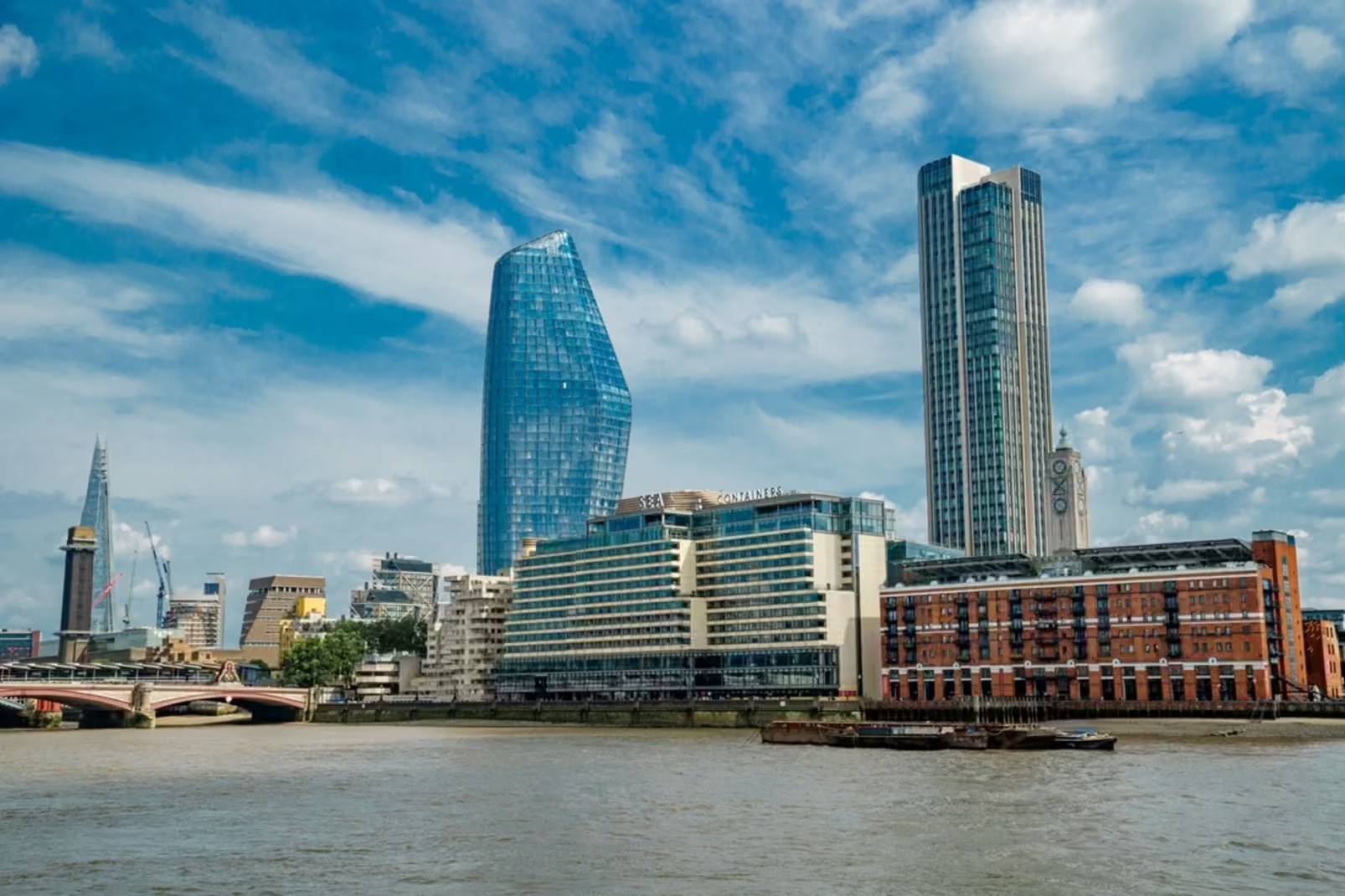
Signing Larger Office Leases
We are starting to receive more enquiries from AI companies seeking larger workspace and longer terms in London, highlighting how they are increasingly renting office space as established, permanent occupiers do, rather than behaving like higher-risk, short-term tenants.
This is reflected in Anthropic’s leasing activity, with its latest deal at around 158,000 sq. ft. at One Triton Square in Euston. However, this is not a one-off, and it is their sixth lease with the same landlord as they have scaled up. This suggests that AI businesses are becoming reliable, long-term occupiers worth investing in.
OpenAI illustrates a similar pattern, securing a long-term lease for around 85,500 sq. ft. of office space in King’s Cross. We have found that this graduation from flexible to traditional office space is becoming a template for how rapidly growing AI companies are expanding in London.
This behaviour suggests AI’s impact on the market is structural, rather than a short-term spike of one-off deals. 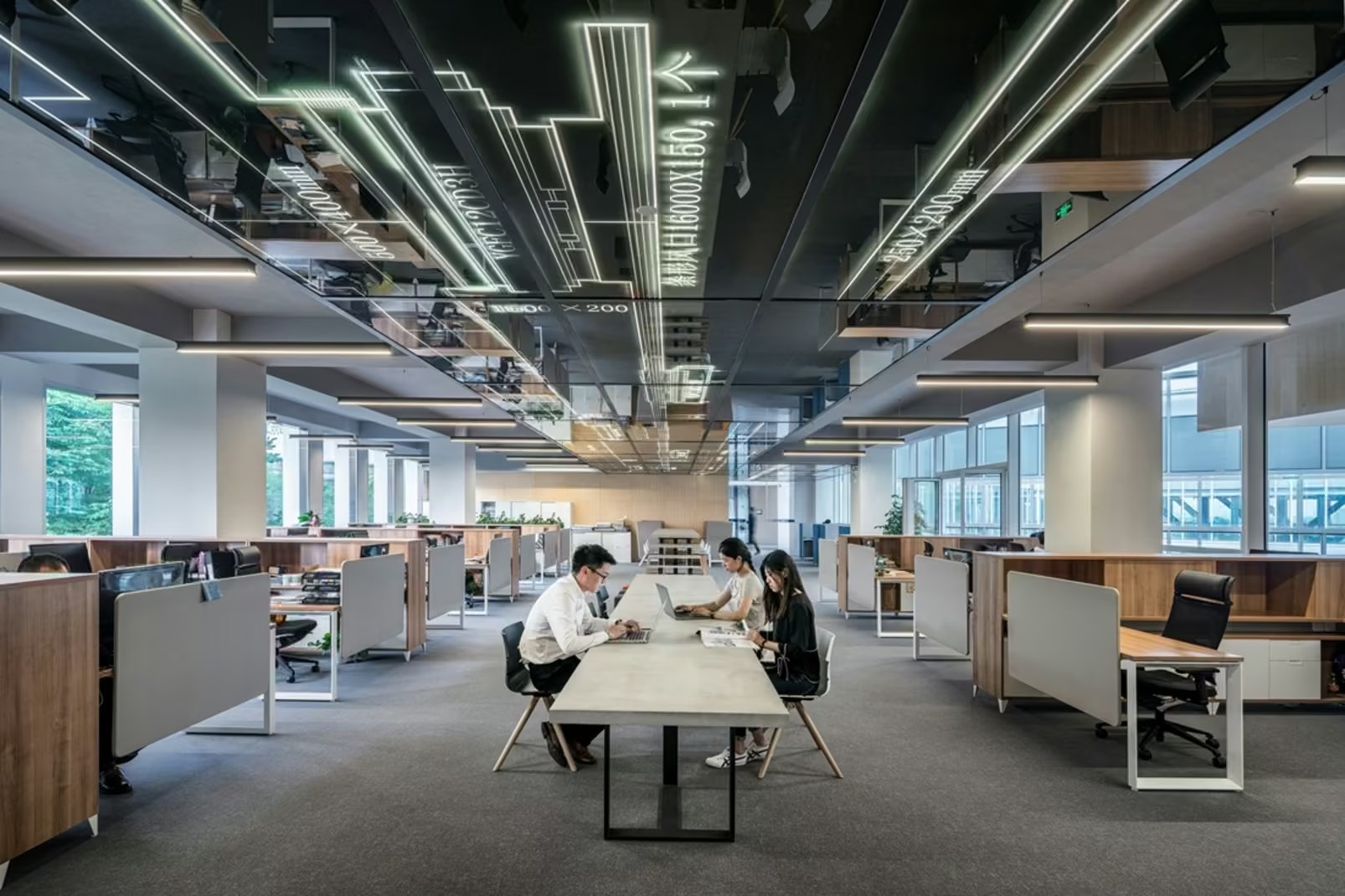
Clustering Around the Knowledge Quarter
From our enquiries, we can see that AI companies mainly search for office space in the Knowledge Quarter. This area is centred around the academic, cultural, and research institutions in King’s Cross, Euston and Bloomsbury.
We found that almost half of all AI office deals signed in April 2026 were in the King’s Cross and Euston area, and our enquiry patterns reflect a similar trend. This highlights its transformation into one of London’s most sought-after office districts, largely driven by AI companies choosing to base themselves near like-minded organisations and research talent from UCL, The Alan Turing Institute, and Google DeepMind.
However, Microsoft’s 100,000 sq. ft. Soho lease shows this clustering is not absolute and that AI-driven demand is starting to shape office markets beyond its core hub.
We are noticing that as office space to rent in the Knowledge Quarter becomes scarcer, demand is increasing in other areas of Central London. Clients we have worked with often start by looking in King’s Cross and then consider other areas, illustrating how AI is driving competition for space citywide. 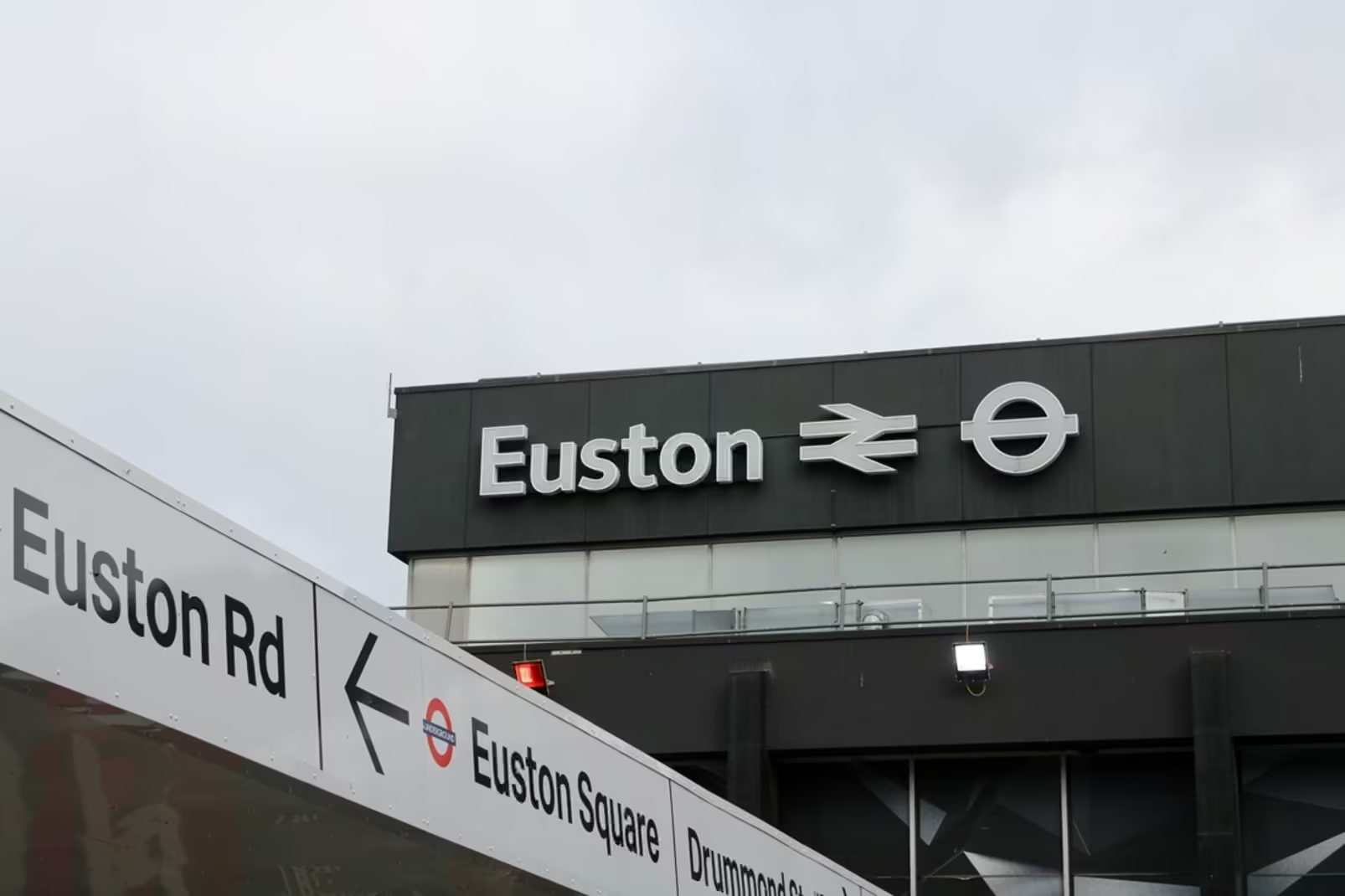
Accelerating the Flight to Quality
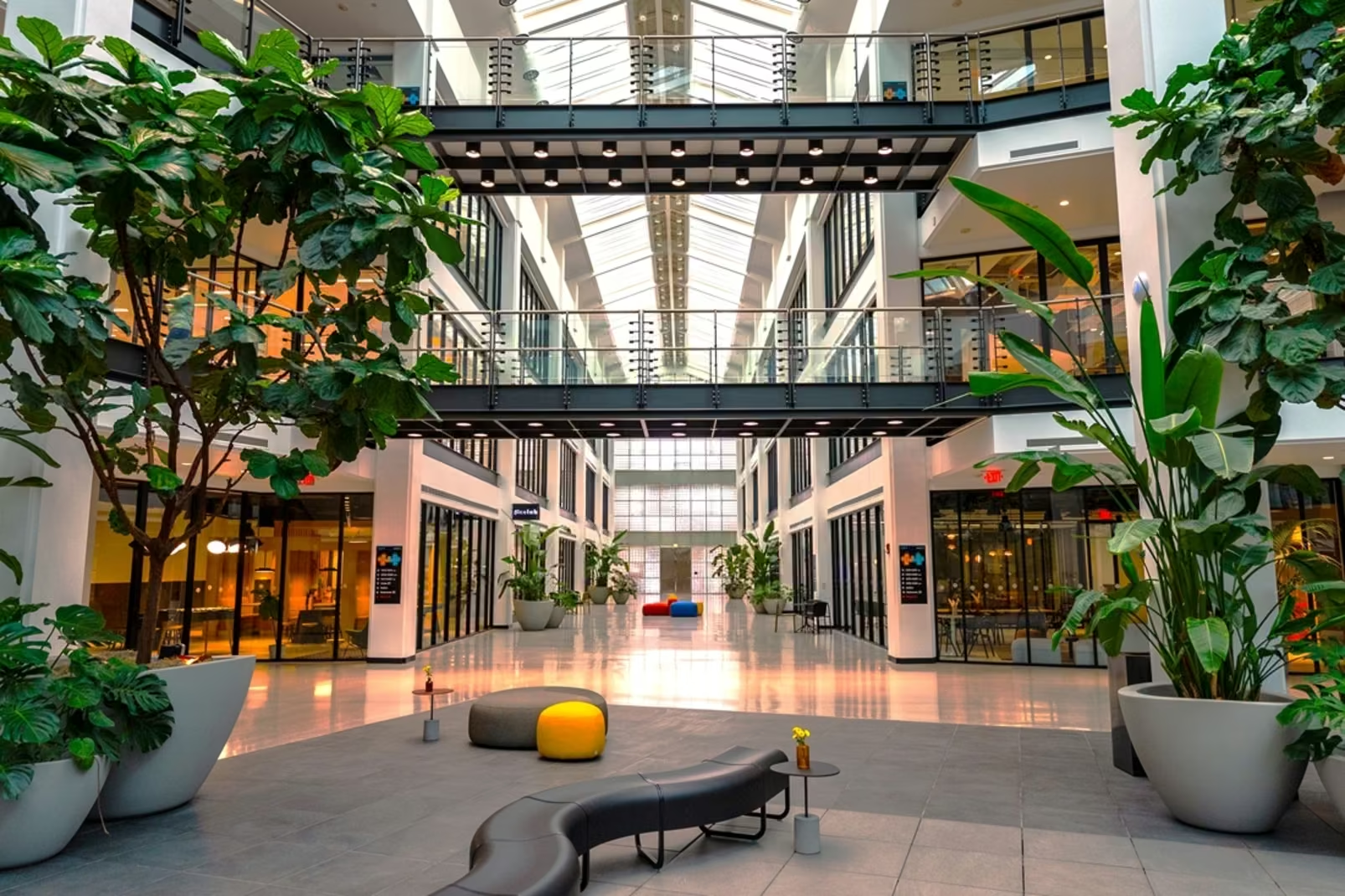
Our research demonstrates that AI is also accelerating a wider shift in what tenants expect from their workspaces altogether, a trend known as the flight to quality. We’re increasingly receiving requests from AI-led businesses for advanced power capacity, connectivity, and digital infrastructure, leading them to choose premium, refurbished office buildings over older stock.
This is widening the gap between secondary and Grade A office space, something we’d expect to narrow over time, but limited supply is preventing this. Based on our understanding of the market and current demand, new-build construction would only cover just over a year of typical take-up.
As a result, our data shows that businesses are chasing the same Grade A stock, with rents rising by about 15% since 2025 across the space we market. This trend is reflected directly in our enquiry patterns, where AI firms are now competing, alongside other law and finance-sector tenants for the same limited pool of premium space.
At the same time, this data shows Grade B buildings are seeing rents fall by almost 20%. This is largely due to weaker network infrastructure, digital resilience, and green credentials. We expect this divide to widen even further as the 2031 deadline for minimum energy performance standards approaches.
Forcing Landlords to Invest in Retrofitting
In response to the rising demand for higher-quality space from AI companies, many of the landlords we work with are retrofitting offices by upgrading an existing building’s power capacity, connectivity, and energy efficiency, rather than starting from new.

This highlights how landlords are rethinking how and where they invest by matching what AI companies typically look for in office space - proof that the market is being reshaped, not just tenant demand and behaviour within it.
The payoff for landlords who retrofit early is already clear. Having spoken to the landlord at One Triton Square, we know that since being upgraded and securing Anthropic as a tenant, the building is now more than 75% let, with much of the remaining space already under offer. As a result, we expect this to push other landlords to retrofit earlier to stay competitive for AI tenants.
Prioritising London Over Other Global Hubs
Many of the international AI companies we get enquiries from have told us they are choosing London over other global hubs for its talent, funding, and research ecosystem.
A survey by London & Partners found that 77% of international AI business leaders rated London as being more supportive for AI development than other leading hubs.
This confidence is also reflected in data from Dealroom, which shows that London-based startups raised a record $3.5bn in venture capital funding in 2024. This number was higher than Paris and Munich combined, behind only New York and the Bay Area. Furthermore, City AM reports that this figure doubled to $7bn in 2025.
According to TNW, AI companies signed 565,000 sq. ft. of London office space between January to April 2026. They also report that London now has more medium-to-large AI firms than the San Francisco Bay Area (Silicon Valley), often considered the world’s leading AI hub. London has also reclaimed the top spot in Europe for tech and AI investment, overtaking Paris.
These findings show that London is not only attracting AI businesses but also reinforcing its position as Europe’s leading hub and is considered an increasingly credible rival to the world’s top tech centres.
The Outlook for London’s Office Market
The number of AI businesses in London continues to grow. Analysis from Hiscox, based on Companies House data, shows that between April 2020 and April 2025, 1689 technology firms with “AI” in their name were registered in the city. This has created a large pipeline of companies that may require office space, particularly as they grow.
If AI office demand continues to grow at its current pace, industry forecasts suggest that in the coming years, cumulative AI take-up is expected reach around 4m sq. ft., almost three times its current level.
However, the same firms leasing record amounts of office space are also cutting jobs elsewhere, using automation to replace the work people used to do. CIPD’s Labour Market Outlook found that one in six UK employers expect AI to shrink their workforce, with larger firms most at risk.
This trend is also being felt in London, where a City Hall poll found 56% of workers expect AI to affect their jobs in 2026. This highlights how AI is reshaping how companies lease office space and how they operate.

We’ve found that this surge in AI-driven leasing activity has also been compared to the dot-com bubble, and after speaking to providers and AI clients, they have told us that they wonder whether it will slow down just as quickly.
Despite this, our analysis shows that the area’s skilled workforce, world-class research institutions, and strong investment that first attracted AI businesses should help London withstand any downturn.
Over the past decade, we’ve seen AI evolve from a niche office occupier to one of the biggest drivers of change in the London office market, influencing tenant expectations, where companies rent and how much office space costs.
For businesses seeking office space to rent today, the workspace and location you choose matter more as the gap between premium and secondary space widens. Grade A buildings are thriving, while Grade B stock struggles, highlighting how the market is being reshaped unevenly. If AI-driven demand keeps growing as expected, London’s office market will continue to shift alongside it.