
What Is the Flight to Quality?
The “flight to quality” refers to a shift in demand towards better, high-spec office space. In simple terms, businesses are moving away from older or secondary offices and towards modern, well-located, well-equipped, often Grade A office environments.
Cost is still part of the decision, but it is no longer the primary driver when renting office space. Greater emphasis is now placed on how the space performs day-to-day, with businesses investing more in the overall user experience.
We are increasingly seeing businesses upgrade from older stock to contemporary serviced offices or refurbished space, relocate to better areas, or reduce their footprint to prioritise quality over quantity.
Why Businesses Are Choosing Better Office Space
Rising workplace standards
Businesses are choosing better office space as expectations of what the workplace should deliver have increased. The brief used to be simple, with firms prioritising desks, meeting rooms and kitchen facilities.
Today, clients who reach out to us for office space are seeking environments that enable collaboration, focused work and productivity. Older or lower-spec spaces often struggle to meet these standards, particularly when compared with modern serviced or managed offices.

Hybrid working is raising the bar for office environments
Hybrid working is a key driver behind higher standards in office space. With more people able to work from home, the office now must justify the commute.
Clients frequently tell us their teams are less willing to come to the office if a space feels outdated or poorly maintained. The workplace must earn attendance, and as a result, businesses are more willing to pay for higher-quality, experience-led workspace.
Greater focus on attracting and retaining talent
The quality of a workplace also plays an important role in how businesses compete for talent. Potential candidates typically assess the office space as part of their overall view of an employer.
A well-run office in an easily accessible location also signals to existing staff that the business is investing in them and their experience, helping to retain them, while older or lower-quality space can undermine that message.
Growing importance of brand perception
The office is where first impressions are formed, clients are hosted, and company culture is reinforced. Many of the businesses we work with treat their workspace as a direct reflection of their brand and choose office space that aligns with this.
What Higher-Quality Office Space Typically Offers
While there is no single definition of quality, the same characteristics consistently feature in the spaces we recommend and the offices we view with clients.
Well-connected locations
Location is often one of the first things we discuss with clients. In our experience, renting higher-quality office space usually means being close to major transport links, key business districts, and amenities that support the working day.
For serviced offices in London, many of the firms we work with favour central locations such as the West End and the City, as well as workspaces near key interchange hubs, including Liverpool Street, Tottenham Court Road, and Bank.

Design-led spaces built around how teams work
The best office environments are designed around how teams operate today, rather than how they worked in the past. This usually includes a mix of focused workstations, private meeting rooms, collaborative areas, and shared spaces for downtime and informal interaction.
We receive the most enquiries for serviced offices that deliver this as standard, helping businesses avoid the cost and disruption of a full fit-out.
Premium amenities designed for daily use
Office amenities are often one of the first things clients notice when viewing office space for rent. Well-equipped kitchens, showers, reliable internet connectivity, meeting rooms, and on-site management are now expected as baseline requirements.
Premium flexible workspaces now include additional office perks and features such as gyms, cafés, outdoor areas and wellness facilities, alongside well-designed communal areas and on-site support that ensures the space runs smoothly day to day.
While parking is standard in many regional offices, it is often seen as a luxury when renting office space in Central London, where availability is limited.
Integrated workplace technology and infrastructure
In our experience, many businesses underestimate the importance of technology until it becomes an issue. Reliable internet, strong AV systems, and secure building access are essential, particularly for hybrid teams.
Older buildings and lower-spec space often cannot deliver this without additional investment from the occupier. In contrast, modern Grade A offices provide advanced infrastructure, including smart booking systems, climate control, and integrated meeting room technology.
Sustainability credentials that meet current standards
Sustainability has become a key focus for businesses when comparing office space, particularly among those with formal ESG commitments.
Strong EPC ratings, energy efficiency, sustainable building materials, and recognised certifications such as BREEAM are now part of the brief from the outset. We also see features such as natural light and biophilic design being prioritised, particularly by businesses focused on employee wellbeing.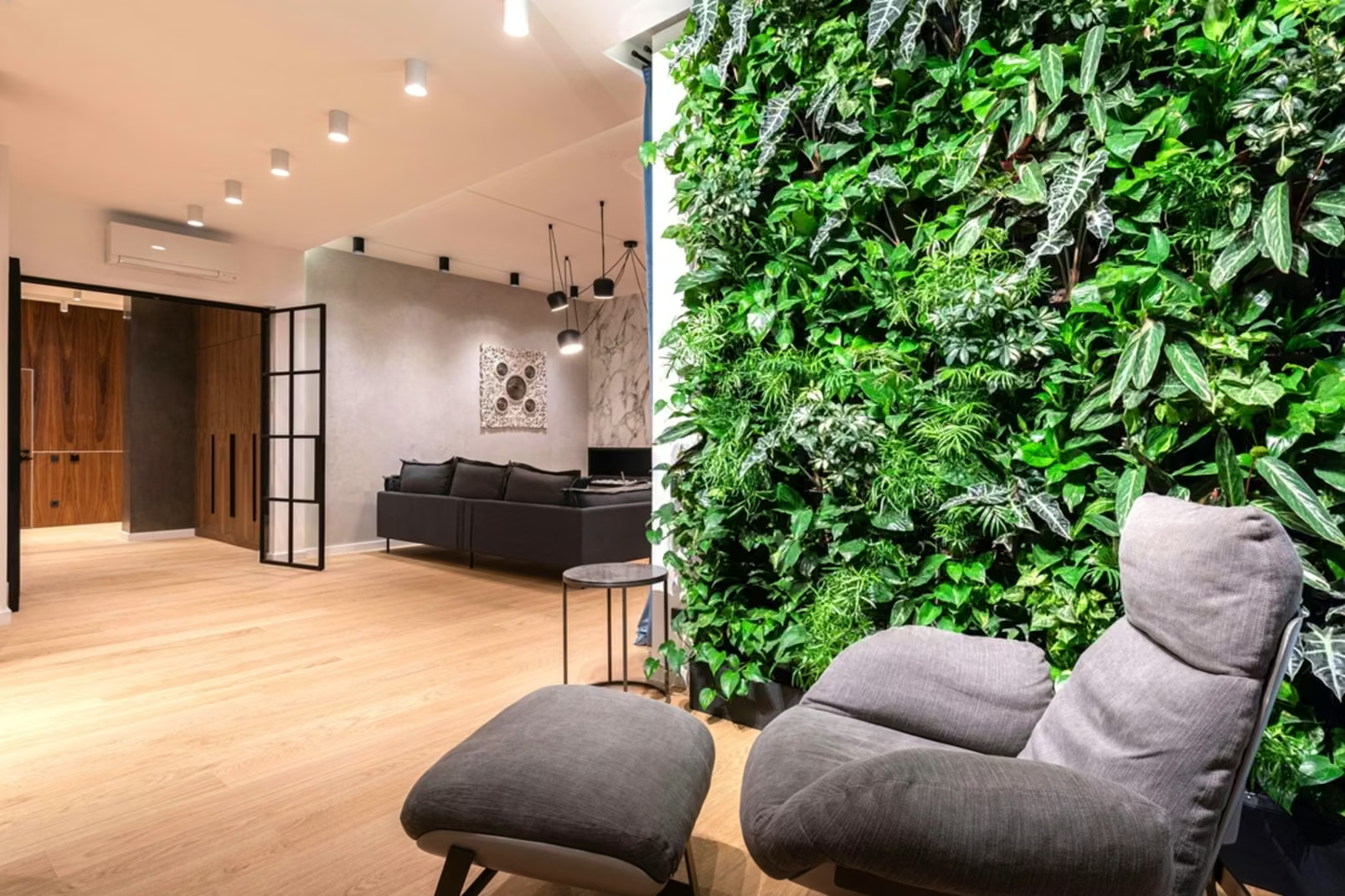
Benefits of Upgrading Your Workspace
Better office space is not just about appearance or design. There are also clear, practical benefits we see once businesses move into higher-quality offices.
Increased office attendance
From our experience, clients who relocate to better-quality office space consistently see improved office attendance. These environments can compete with the comfort of working from home, encouraging people to come in more regularly.
Improved employee satisfaction
A better office environment is usually felt immediately, with teams responding positively to a space that is more comfortable, functional, and enjoyable to work in. This typically leads to higher employee satisfaction and can improve staff retention.
Stronger, more credible business image
In our experience, renting high-spec, well-located office space improves brand image and credibility. This is particularly beneficial for businesses where reputation and relationships matter, such as professional services firms, consultancies, and client-facing teams.
More efficient use of space
As organisations move into more efficient office spaces, they often report better usage of the floorplate, with less underutilised space. Adaptable layouts and shared facilities increase flexibility, often allowing businesses to downsize and reduce costs.

Greater long-term value
Although office rental costs may seem higher at first, businesses often find that premium workspace offers better long-term value. Serviced and managed office space does not require a full fit-out and is typically offered on an all-inclusive monthly basis. This makes budgeting easier and improves cost efficiency over time.
Key Considerations When Choosing Quality Office Space
The flight to quality is now a well-established trend in the office market; however, choosing the right office space to rent still requires careful decision-making. Different features suit certain businesses, and we can help clients avoid paying for facilities and specifications they do not require.
Ensure the space matches how your team works
At FreeOfficeFinder, we take the time to understand each client’s requirements and preferences, helping to define what quality means for them before making any recommendations. Even businesses of a similar size can require very different office layouts and environments.
For example, we regularly see law firms prioritising spaces that offer privacy and support confidentiality, while creative businesses tend to prefer open-plan layouts that support interaction.
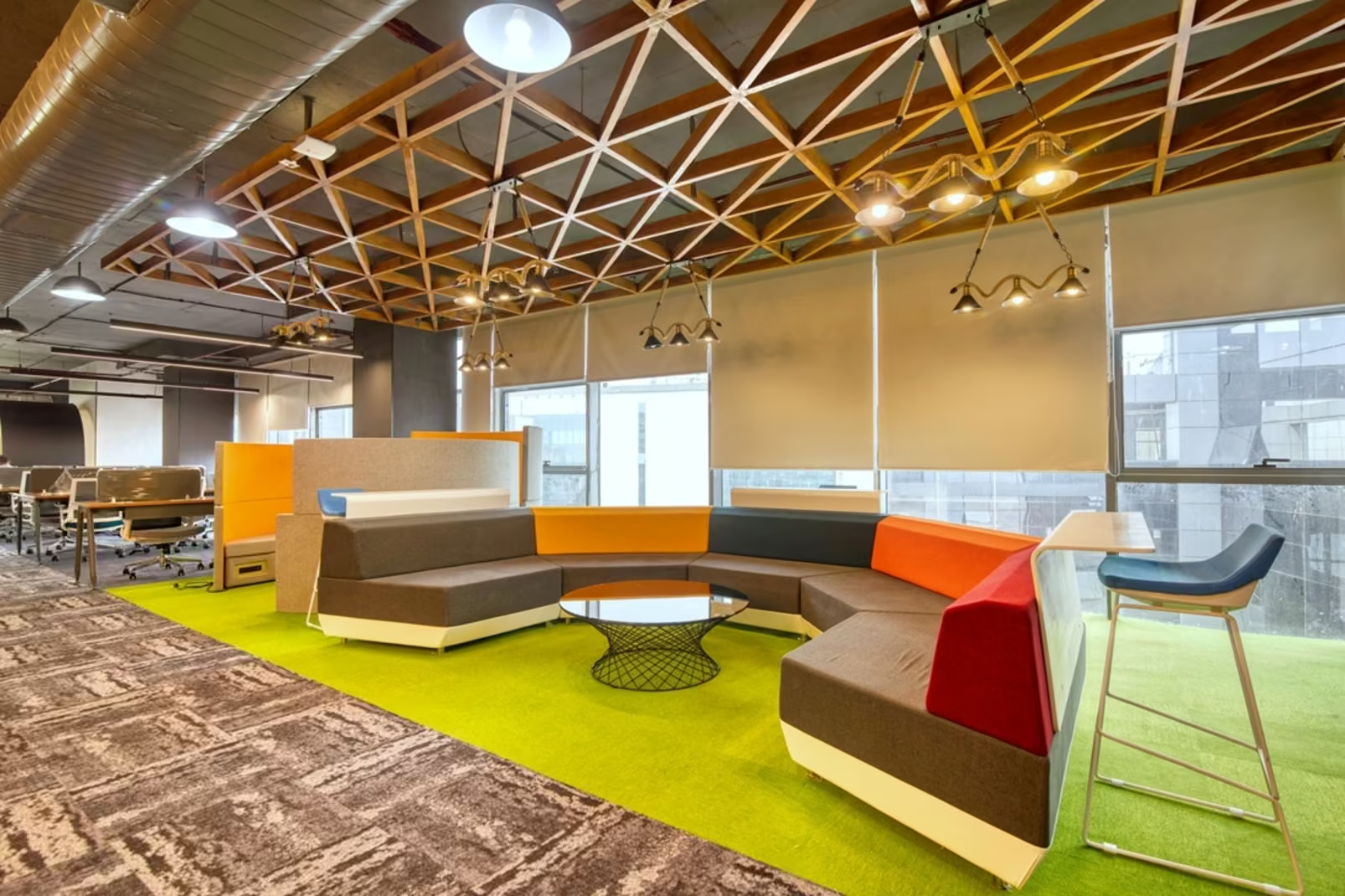
The right space is the one that aligns with how the team works, rather than the largest space or one with the longest amenity list.
Assess whether the higher cost delivers real value
Higher-quality office spaces often come with higher rental prices; however, they can provide greater value over time by improving attendance and staff retention and reducing the need for fit-outs or ongoing maintenance.
As a result, we advise clients to consider how the space will be used day to day and whether the additional cost is justified.
Choose a location that works for both staff and clients
We always emphasise the importance of choosing a location that works in practice when renting office space. This includes considering where the team is based, how often clients need to visit, and whether the area supports how the business operates day to day.
Avoid over-specification
We also recommend visiting offices in person to assess whether the space genuinely suits your team, rather than relying on how it reads on paper. This helps companies avoid paying for a higher specification than they require.
We often suggest viewing the space at different times of the day to understand how it operates before committing.

The flight to quality reflects a shift in how businesses approach office space. Companies are focusing less on cost and more on environments that support their team, improve performance, and deliver long-term value.
As a result, many landlords have refurbished older buildings and upgraded existing office stock to meet modern expectations, while secondary space is becoming increasingly difficult to rent.
For businesses planning a move, the priority is to define what quality means to them, rather than choosing space based on the highest specification or the longest list of amenities. Ultimately, those who align their workspace with how they operate will see the greatest benefit.