
Which Areas Are Considered Central London?
How Do Areas Affect Rental Prices for Office Space?
Where Do Industries Cluster in Central London?
Which Major Station Is Best For Your Business?
What Are the More Affordable Alternatives to Central London?
How Can FreeOfficeFinder Help You Find Office Space to Rent?
Which Areas Are Considered Central London?
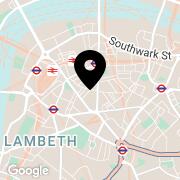
Central London typically refers to Zone 1, centred on the West End and the City. At FreeOfficeFinder we use a wider definition that covers the areas businesses most often consider alongside them.
For office search purposes, we also extend the list to Canary Wharf and the surrounding Docklands, as part of central London’s broader business district.
How Do Areas Affect Rental Prices for Office Space?
Central London offers a mix of functional and premium office space to rent, so budget doesn’t always rule out an area. Based on
our pricing tool data,
private serviced offices in central London broadly fall into three price bands compared with the overall central London average:
• Higher-priced areas (around 30% to 60% above average): in areas like Mayfair, Soho, Monument and St James’s
• Mid-range (within 5% of average): for locations such as Marylebone, Moorgate, Piccadilly and Holborn
• Lower-priced areas (around 20% to 30% below): in Waterloo, Liverpool Street, Angel, and Vauxhall
Managed and serviced office prices can vary significantly within proximity, even within the same district. In the City, a desk near Liverpool Street averages around 45% less than one near Monument, just a 10-minute walk away. Similarly, in the West End, Marylebone averages about 40% less than neighbouring Mayfair.
Where Do Industries Cluster in Central London?
Many industries cluster in specific parts of central London, usually around a nearby institution or client base. The table below shows where key sectors are based and what draws them there.
| Area |
Main industries |
Why there |
Nearby alternatives |
| Mayfair and St James’s |
Hedge funds, private equity, wealth management |
Long-standing home of private capital |
Marylebone |
| Soho and Fitzrovia |
Film & TV, advertising, media |
Historic centre of film and advertising |
Bloomsbury |
|
|
Public affairs, policy, government consultancies |
Parliament and Whitehall |
Pimlico |
| Holborn |
Legal |
Royal Courts of Justice and the Inns of Court |
Fleet Street |
| King's Cross |
Big tech, AI, life sciences |
Major tech campuses, the Francis Crick Institute |
Euston |
| Clerkenwell and Farringdon |
Architecture, design, creative agencies |
Dense concentrations of studios and showrooms and Clerkenwell Design Week |
Angel |
| City core |
Banking, insurance, fintech |
Bank of England, Lloyd's and the London Stock Exchange |
Liverpool Street |
| Shoreditch and Old Street |
Tech start-ups, digital agencies |
Hub for start-ups and part of East London Tech City |
Hoxton |
| Canary Wharf and Docklands |
Global banks, financial services |
Headquarters of major banks |
Surrey Quays |
In our experience, not every company chooses its industry’s main area, and many opt for a nearby location that is more affordable or better connected.
Building type also affects which team sizes each area suits. Areas with many period buildings, such as Mayfair and Soho, tend to suit smaller businesses better, while the City core, Canary Wharf, and King’s Cross offer more options for teams of 100 or more.
Which Major Station Is Best for Your Business?
Central London’s major terminal stations offer direct links to different regions, so an office near the right station can shorten the commute, enabling staff to walk from the train instead of changing onto the Tube. The table below groups stations by the region they serve, with typical journey times from places in each and other nearby central London office areas.
For teams spread across the capital, or several regions, a station on several cross-London routes is usually a better base. Our research on popular office locations near London stations found that workspaces close to multi-line stations typically attract more demand. We’ve included Farringdon, the only station served by both the Elizabeth line and Thameslink, and Bank, which links the City with Waterloo and Canary Wharf.
| Station |
Best for staff commuting from |
Example journey times |
Other London office areas within easy reach |
| Waterloo |
Surrey, Hampshire, the South West |
Woking 25 minutes Guildford 35 minutes |
On foot: Southbank By train: Bank (4 minutes via the Waterloo & City line) |
| Victoria |
Sussex, Surrey, Gatwick |
Gatwick Airport 30 minutes Brighton 60 minutes |
On foot: Belgravia By train: Oxford Circus (4 minutes on the Victoria line) |
| London Bridge |
Kent, Sussex, South London |
Sevenoaks 30 minutes Haywards Heath 45 minutes |
On foot: Monument By train: Westminster (5 minutes on the Jubilee line) |
| Liverpool Street |
Essex and East Anglia |
Chelmsford 35 minutes Colchester 50 minutes |
On foot: Shoreditch By train: Canary Wharf |
|
King's Cross St Pancras
|
Hertfordshire, Cambridgeshire, the East Midlands, the North |
St Albans 20 minutes Cambridge 50 minutes |
By train: Farringdon (4 minutes from St Pancras via Thameslink)
|
| Paddington |
Thames Valley, Heathrow, West London |
Reading 25 minutes Heathrow Airport 15 minutes (Heathrow Express) |
By train: Mayfair (Bond Street, 3 minutes from Paddington via the Elizabeth line)
|
| Farringdon |
East and West London via the Elizabeth line, Hertfordshire and the South via Thameslink |
Liverpool Street 3 minutes London Bridge 8 minutes |
By train: Soho (Tottenham Court Road, 3 minutes on the Elizabeth line)
|
| Bank |
East and West London via the Central line, North and South London via the Northern line, the Docklands via the DLR |
Waterloo 4 minutes Canary Wharf 11 minutes |
|
What Are the More Affordable Alternatives to Central London?
For companies that don’t require a central address, several other established business areas offer more affordable workspace within a short journey of central London. Based on average
serviced office rates in our pricing tool, these include:
•
Stratford: around 54% below the central London average and 7 minutes to Liverpool Street on the Elizabeth line.
•
Croydon: approximately 62% cheaper than the average cost of central London office space, 15 minutes to Victoria or London Bridge via mainline rail.
•
Hammersmith: costs around 29% less than a serviced office in the capital’s centre. Mayfair (Green Park station) is 15 minutes away on the Piccadilly line.
In our experience, some hybrid businesses use a smaller central base for client meetings while renting a satellite office closer to where most employees live, such as in commuter areas like
St Albans,
Reading, or
Guildford.
How Can FreeOfficeFinder Help You Find Office Space to Rent?
We find that most people searching in the capital haven’t chosen a specific area yet, so our team can help you shortlist locations across the City, Midtown, West End, and Southbank. We consider factors such as budget, team size, industry cluster and commute.
Our service is completely free and impartial. In addition to the offices listed on the site, we have access to off-market and newly listed workspace through our long-standing landlord relationships. Our experts will also accompany you on viewings and
ensure you’re looked after.
We negotiate rent-free periods and break clauses on your behalf and can accompany you on viewings. We can also tell you whether a quote is in line with the market or whether a nearby area offers better value.
Our team replies to enquiries the same day, so
get in touch, and we will send you a selection of offices to rent in central London.